How to Prepare Your Property for a Better Clearing Estimate
Home › Blog › How to Prepare Your Property for a Better Clearing Estimate
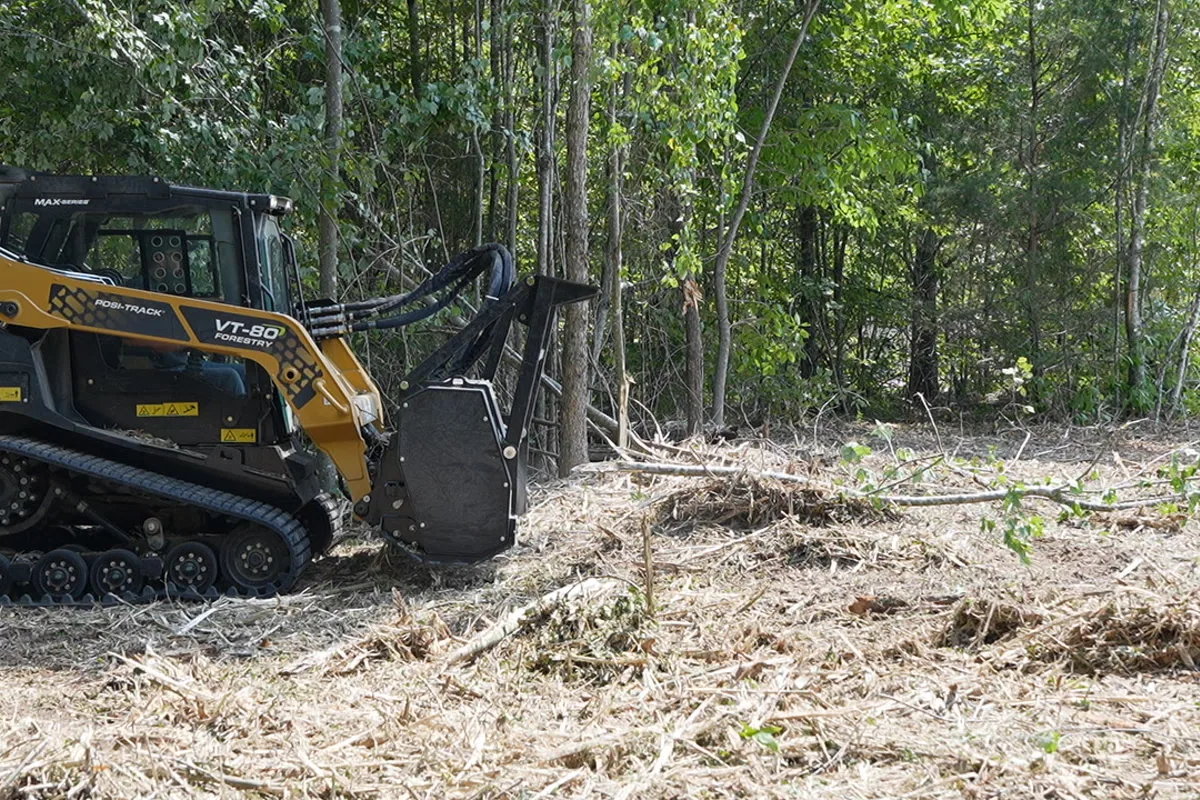
A better estimate starts before work begins. Mark the boundary, explain the goal, and make hidden responsibilities visible.
Begin with the result
Before asking for a price, write down what you want the property to become. Do you need a walkable path, a reclaimed edge, access to acreage, room around a fence line, a clearer view, manageable brush, or space for a later project? That answer matters more than choosing a service from a photo. We can evaluate forestry mulching, land clearing, and grapple work, but each method leaves a different handoff.
If another contractor will follow, ask what that contractor needs. A builder, fence installer, surveyor, or grading contractor may expect a specific route, boundary, or surface condition. Share that information during the clearing walkthrough. We can then describe the vegetation or material work we can perform without implying excavation, grading, permitting, hauling, or construction services that are outside the accepted project plan.
Mark the work boundary and what stays
Walk the property before the estimate and identify where work should begin and end. Mark property lines with reliable information rather than a guess. Flag retained trees, landscaping, habitat features, fences, structures, drainage areas, and any section that should be avoided. If the project includes several priorities, separate the must-do area from optional work so the estimate can fit the approved project plan.
Clear marking reduces uncertainty once work enters dense growth. We shouldn't have to decide from the seat which tree matters or where an unmarked neighbor's property begins. If vegetation blocks visibility, acknowledge that some conditions may remain hidden until work starts and ask how the estimate handles them. A clear boundary also makes the final walkthrough easier because both sides can compare the completed work with the same agreed map or field markings.
Make access information visible
Show the route from the road to the work area. Measure gates and narrow points. Identify tight turns, slopes, soft ground, overhead branches or lines, nearby buildings, parked vehicles, and any surface that should not be crossed. Discuss where the crew can enter, turn, stage, and leave. Access that looks simple in a passenger vehicle can be different during land-management work.
Weather may change ground conditions between the estimate and production day. If a route becomes too soft or unsafe, the schedule or approach may need to change. The estimate should reflect observed access and identify any owner preparation expected before work. Removing personal items, opening gates, relocating vehicles, and clearing the agreed staging area are small steps that can protect productive time.
Disclose utilities and private property systems
Public utility location does not necessarily identify every private line or system on a property. Tell the contractor about known private electric, water, fuel, communications, irrigation, septic, drainage, and other buried or surface features. Mark them using reliable information. Identify wells, tanks, cleanouts, drain fields, low branches, and anything else that could affect work in the area.
The property owner is in the best position to gather documents and information that exist outside the visible site. Do not assume dense vegetation makes a hidden feature the contractor’s responsibility. The project plan should state which systems and boundaries the owner must identify before work. If reliable information is not available, the project may need to exclude that area until the risk is resolved. It is better to narrow the boundary than to price work around an unsafe assumption.
Ask for a project plan you can read back
A useful estimate should let you explain the project to someone who never attended the walkthrough. It should identify the location and work boundary, the service method, vegetation or material included, retained features, access route, placement area for grapple work, expected finish, exclusions, project details, site access, and owner preparation. It should also say how additional work or changed conditions will be approved.
Review the document before paying or scheduling. If your expectation is hauling, grubbing, grading, or another service not written there, ask before production day. Call (629) 219-5178 with the property location and intended result, then use the walkthrough to turn that first conversation into a specific agreement.
Ready to make your property easier to use and maintain?
Tell us where the property is, what the area looks like now, and what you want to accomplish. We’ll help you determine the best next step and build a clear scope for the work.
Request an Estimate